The Job Search Checklist: What You Need to Start Job Hunting
Why Your Job Search Feels Like Shooting in the Dark
Let's be honest, traditional job search advice is like following a recipe without knowing what dish you're making. "Update your resume!" they say. "Network more!" they insist. But update it how? Network with whom?
The data tells a different story. When we analyzed successful job transitions, we found that 73% of people who landed their target roles didn't follow the standard checklist. Instead, they took paths specific to their industry, background, and target position.
For instance, software engineers transitioning to product management roles had a 68% higher success rate when they first acquired project management certifications, something rarely mentioned in generic job search guides. Marketing professionals moving to leadership positions? 89% had direct digital marketing experience, while only 42% had the MBA everyone says you need.
The Job Search Checklist (What You Need to Start Job Hunting)
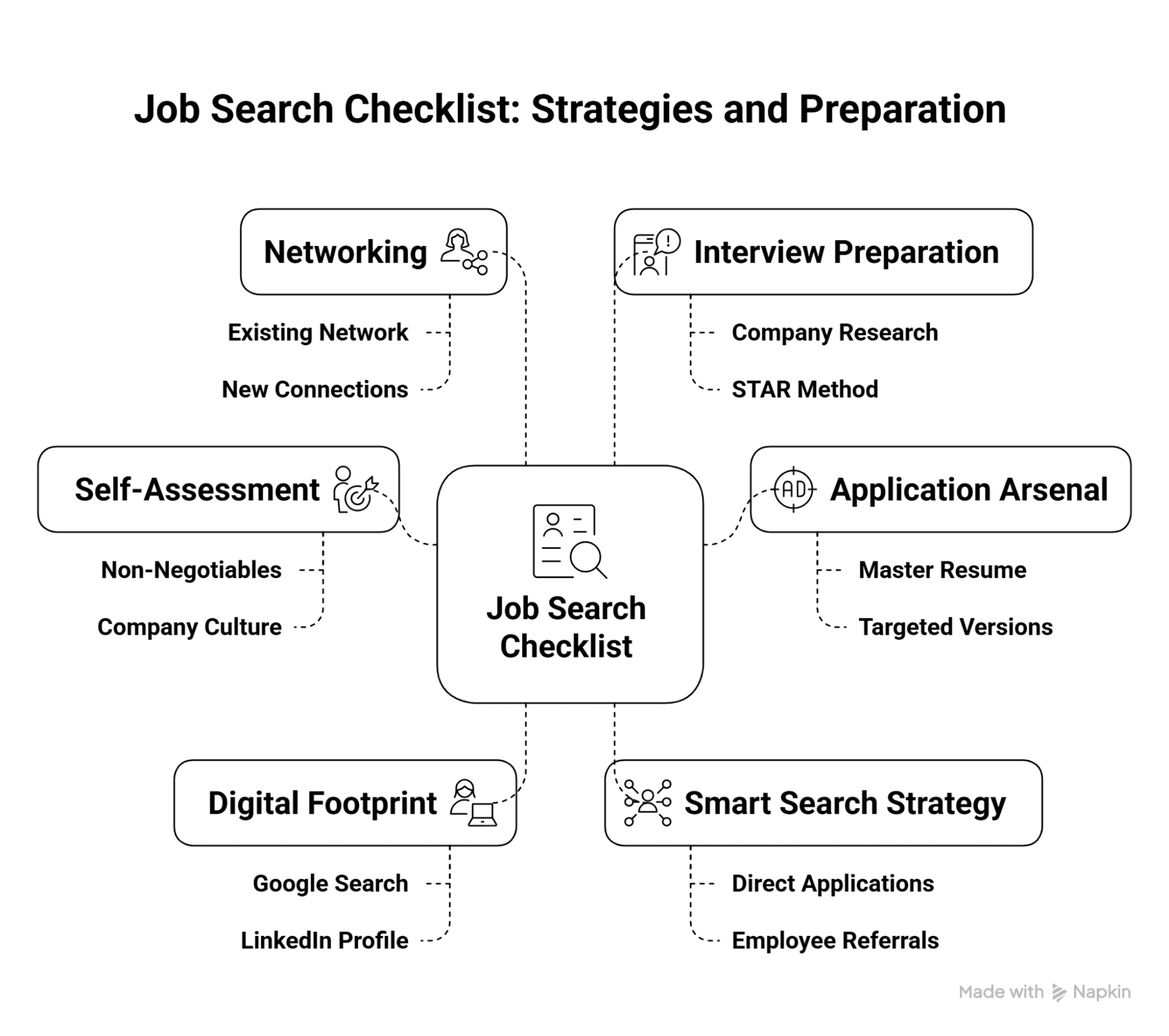
Starting with Self-Assessment
Before diving into job boards and applications, the most successful job seekers invest time in understanding what they actually want. This isn't about finding your passion or taking personality tests, it's about getting crystal clear on your practical requirements and career direction.
Start by defining your non-negotiables. What's the minimum salary you need to maintain your lifestyle? Are you willing to relocate, or is remote work essential? What kind of company culture energizes you versus drains you? These aren't trivial questions, they're the foundation that will guide every application you submit.
Building Your Application Arsenal
Your resume remains your primary marketing document, and it needs to work hard in the 6-7 seconds it gets from initial reviewers. The days of one-size-fits-all resumes are over, successful candidates customize their materials for each application.
Start with a master resume containing all your experience, achievements, and skills. This becomes your source document from which you'll create targeted versions based on each job description's specific requirements and keywords. When crafting your professional summary, skip generic statements about being a "motivated self-starter." Instead, lead with specific value: "Digital marketing specialist who increased online revenue by 40% through strategic SEO and content initiatives."
Your experience section should tell stories of impact, not just list responsibilities. Instead of "Managed social media accounts," try "Grew Instagram engagement by 300% in six months, resulting in 50% increase in website traffic from social channels." Numbers speak louder than adjectives.
Mastering Your Digital Footprint
Employers will Google you, check your LinkedIn, and possibly scan your social media. This isn't about paranoia, it's about ensuring what they find supports your professional narrative.
Start with a Google search of your name in incognito mode. What appears in the first three pages? If there's anything concerning, address it. This might mean adjusting privacy settings, removing tagged photos, or creating new professional content to push down older results.
LinkedIn deserves special attention as it's often the first place recruiters look. Your profile should complement your resume, not duplicate it. Use the summary section to add personality and context to your professional story. Ensure your headline says more than just your current job title—think of it as your professional tagline. "Financial Analyst | Transforming Data into Strategic Business Decisions" tells a better story than "Financial Analyst at XYZ Corp."
The Smart Job Search Strategy
The most effective job searches use multiple channels strategically rather than applying randomly across every job board. Think of your search strategy as a pyramid, with the most effective methods at the top deserving most of your attention.
Direct applications to company websites and employee referrals consistently yield the highest success rates—around 60-70% of successful placements come through these channels. Industry-specific job boards and professional associations follow closely behind.
Networking That Actually Works
The hidden job market is real, many positions get filled through connections before being posted publicly. But effective networking isn't about collecting business cards or sending LinkedIn requests to strangers. It's about building genuine professional relationships.
Start with your existing network. Former colleagues, college classmates, and even friends in different industries can provide valuable connections. The goal isn't to ask for jobs directly but to seek insights and advice. People are remarkably willing to help when approached respectfully.
When reaching out to new connections, especially for informational interviews, be specific about why you're contacting them and what you hope to learn. "I saw your transition from teaching to UX design and would love to hear about your journey" works better than "I'm looking for a job, can you help?"
Remember to nurture these relationships beyond your immediate job search. Send thank-you notes after conversations, share relevant articles when you see them, and update contacts on your progress. The best networking creates value for both parties.
Interview Success Preparation
Landing an interview means your application worked—now you need to close the deal. Successful interviews require preparation beyond memorizing common questions.
Research goes beyond skimming the company website. Understand their recent news, challenges in their industry, and where they're headed. Check out their competitors and market position. Look up your interviewers on LinkedIn to understand their backgrounds and potentially find common ground.
Practice your stories using the STAR method (Situation, Task, Action, Result), but don't sound robotic. Have 5-7 specific examples ready that demonstrate different competencies. These stories should be flexible enough to answer various behavioral questions.
Prepare thoughtful questions that show you've done your homework. "I noticed you recently expanded into the European market—how is that affecting the marketing team's priorities?" demonstrates engagement beyond surface level. Always have questions ready; saying you have none suggests lack of interest.
Organizing for Success
A successful job search requires treating it like a project, complete with tracking systems and metrics. Without organization, you'll lose track of applications, miss follow-up opportunities, and repeat efforts unnecessarily.
Create a simple tracking system that includes company name, position, date applied, contact person, status, and next steps. This can be as basic as a spreadsheet or as sophisticated as a project management tool. The key is using it consistently.
Monitor your metrics to understand what's working. Track your application-to-response rate (typically 10-15%), response-to-interview rate (20-30%), and interview-to-offer rate (varies widely by industry). If your rates fall significantly below these averages, it's time to adjust your approach.
Your Realistic Timeline
Understanding realistic timelines helps manage expectations and reduce anxiety. The average job search takes 3-6 months for entry-level positions, 2-4 months for mid-career moves, and 4-8 months for senior roles or career changes. These timelines can vary significantly based on industry, location, and economic conditions.
Your first two weeks should focus on foundation building: updating all materials, auditing your online presence, and clarifying your goals. Weeks three and four shift to active searching: researching companies, beginning applications, and initiating networking outreach. By month two, you should be in full swing with regular applications, active networking, and hopefully some initial interviews.
Your Next Move
The job search isn't about following a generic checklist; it's about understanding the paths others have successfully taken and adapting them to your unique situation. The difference between a 6-month struggle and a 6-week success often comes down to having the right map.
The most successful job seekers don't just work harder, they work smarter by learning from those who've already made the journey. They know which skills actually matter for their target role, which connections will accelerate their search, and which companies hire people with their background.
Ready to see the exact paths others took from your position to your dream role? Stop guessing and start navigating with real career intelligence. Explore career paths that match your background and goals, because the best job search checklist is the one based on actual success stories, not theory.
Transform Your Job Search with Data-Driven Intelligence
While this checklist provides the framework for your job search, imagine having access to the actual playbooks of thousands who've successfully made your exact career transition. The job intelligence platform from Routed AI takes away the guesswork by showing you real career paths, including the skills professionals gained and the connections that were most important. See the exact timelines, salary progressions, and strategic moves others made to land your target role. Plus, connect directly with people who've walked this path before and understand exactly where you're coming from.
Ready to navigate your job search with a clear map instead of wandering in the dark? Explore career paths that match your background and see how others successfully made the journey you're about to begin.

Sign up for our newsletter
Subscribe to our newsletter to receive product updates, news, and special offers.